

Custom Built Bed: A Buyer's Guide for Vacation Rentals
- Andy North
- 1 day ago
- 12 min read

A lot of rental owners reach the same point at the same time. The calendar is filling up, larger groups keep asking how many people the house can sleep, and the current bedroom setup leaves money on the table. A remodel feels expensive and slow. A well-designed custom built bed often solves the problem faster, with less disruption, and with a better result than trying to carve out a brand-new bedroom.
That's especially true in ski homes, cabins, beach houses, and family retreat properties where every square foot needs to work hard. In Park City, Heber, Midway, and other mountain markets, it's common to see awkward rooms, sloped ceilings, bonus spaces, and loft areas that don't work well with standard furniture. In coastal rentals, the problem is usually different. The room may be simple, but the guest count is high and turnover is constant.
A good custom bed isn't just furniture. It's a space-planning decision, a durability decision, and for short-term rentals, a revenue decision. The owners who get the best results usually stop thinking in terms of “adding bunks” and start thinking in terms of fit, noise control, adult use, cleaning, and repeat wear.
The Smart Way to Add Sleeping Capacity to Your Rental
A common scenario looks like this. A property owner has a strong home in a high-demand market, but one bedroom is underperforming. It may have enough floor space for more sleeping capacity, yet a standard bed frame only allows one sleeping surface and wastes the vertical space.
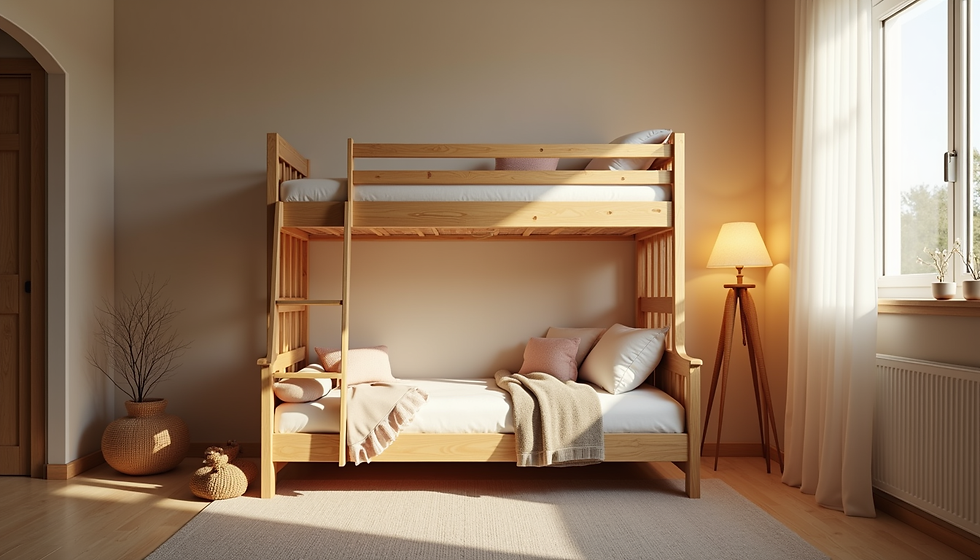
That's where a custom built bed changes the conversation. Instead of forcing the room to accept a retail bed, the bed is built around the room, the guest profile, and the way the property operates. For a Park City ski home, that may mean a built-in-look bunk room that lets two families stay comfortably. For a family cabin, it may mean using a low-ceiling room that would otherwise remain a storage space. For a beach rental, it may mean adding adult-friendly queen bunks that increase usable sleeping capacity without making the room feel temporary.
Why rentals need a different standard
Vacation rental bunk beds live a harder life than owner-occupied bedroom furniture. Different guests use them every week. Adults use them. Kids climb on them. Cleaning crews move around them quickly. Property managers need them to stay tight, quiet, and easy to inspect.
Practical rule: In a rental, extra sleeping capacity only helps if the bed stays solid, safe, and easy to maintain through repeated turnover.
Owners usually regret two types of purchases. The first is a flimsy off-the-shelf bunk that looks acceptable on day one and feels loose later. The second is a custom project that focused on style but ignored access, rail design, mattress fit, or cleaning clearance.
A strong custom solution works because it solves several problems at once:
It fits difficult rooms. Low ceilings, corner windows, alcoves, and narrow bunk rooms often need custom dimensions.
It handles adult use better. That matters in bunk beds for Airbnb, ski homes, and family vacation properties.
It improves listing appeal. A polished bunk room photographs better than a spare room with miscellaneous beds.
It can lower long-run hassle. Fewer breakdowns and less movement matter more than people expect.
That's the lens worth using from the start. Not “Can I squeeze in more beds?” but “Can I add sleeping capacity in a way that holds up?”
What Defines a True Custom Built Bed
A true custom built bed is designed for a specific room and a specific job. That sounds obvious, but many products labeled “custom” are really just standard frames with a few finish choices. Real custom work starts earlier. It considers the room dimensions, the mattress dimensions, the ceiling height, the access point, the use pattern, and the visual style before fabrication begins.

Made to order is not the same as off the shelf
The current custom-bed market has moved back toward made-to-order production. Many makers use solid hardwood, offer custom sizing and storage, and some position their products around sustainability, including claims such as 100% recyclable and LEED certified, as described by Scott Jordan custom wooden bed frames. That matters because it reflects how the category has changed. Buyers aren't only paying for looks. They're paying for fit, durability, and a bed that solves a room-specific problem.
A mass-market bed is built around standard assumptions. Standard room. Standard mattress. Standard use. Standard shipping carton. That approach works fine when the room is simple and the bed won't see much abuse.
It works poorly when the room has any of these issues:
Angled or low ceilings
Tight wall-to-wall clearances
A need for adult bunk beds
A desire for a built-in look without full built-in construction
A requirement for storage, trundles, or stairs
The room should drive the design
In custom bunk beds and built-in bunk beds, the room often dictates the structure. A mountain home may need bunks tucked beneath a dormer. A beach condo may need a hallway bunk with shallow depth. A family cabin may need triple bunk beds in a room where door swing and stair placement matter more than aesthetics.
That's why the best custom built bunk beds rarely begin with finish samples. They begin with measurements, circulation, headroom, and how guests will use the room.
A bed that fits the room on paper can still fail in practice if the ladder crowds the doorway, the upper bunk has poor headroom, or the lower bed sits where housekeeping can't clean around it easily.
The strongest projects balance three things at once:
| Priority | What it means in practice | | | | | Fit | The bed uses the room efficiently without making it feel cramped | | Strength | The frame, joinery, and support strategy match repeated rental use | | Appearance | The final result looks intentional, whether rustic, modern rustic, or clean built-in style |
That's the difference between a furniture purchase and a room solution.
Exploring Your Customization Options
The easiest way to plan a custom built bed is to break the decision into three buckets. Configuration first. Materials and finish second. Features third. When owners reverse that order, they often end up chasing a look before they've solved the room.

Configuration comes before color
Start with the sleeping plan. How many people need to sleep in the room, and who are they? Kids only, mixed ages, or adults too? A bunk room in a ski property may need adult-friendly queen-over-queen bunks. A family cabin may work better with triple bunk beds. Some large bunk rooms justify quad bunk beds if circulation is still comfortable.
Common directions include:
Queen-over-queen bunks for adult use in vacation homes and premium rentals
Twin-over-queen combinations when the room needs flexibility
Triple bunk beds for narrow rooms with vertical potential
Quad bunk beds for dedicated bunk rooms serving large groups
Built-in-look freestanding systems when you want the custom appearance without fully site-built construction
The choice should come from room shape, not trend photos. A configuration that looks good in a wide room may feel oppressive in a narrow one.
Mattress fit is a technical issue
A professional design uses the actual mattress dimensions, not just the label. A “queen” is a category name, not a guarantee of identical finished size. The frame also needs enough clearance for bedding and tucking space so the mattress doesn't bind against the rails and wear prematurely, as discussed in Fine Woodworking bed design guidelines.
That small detail affects the whole project. If the mattress fit is too tight, guests fight the sheets. Housekeeping fights the bed every turnover. The rails and fabric edges take unnecessary abuse.
Materials and finish change how the bed ages
Material choice affects sound, stiffness, repairability, and appearance over time. In high-traffic properties, owners usually want a finish that hides normal wear and a structure that doesn't loosen quickly from repeated climbing and side loading.
A few practical tendencies:
Stained wood often wears more gracefully in rustic bunk beds and modern rustic bunk beds.
Painted systems can look cleaner and more architectural, especially in beach houses or brighter bunk room design schemes.
Heavier-looking profiles often suit mountain homes and lodges better than thin retail-style rails.
Features should earn their footprint
The most requested extras are often stairs, ladders, drawers, trundles, reading lights, and charging access. Not all of them belong in every room.
Storage stairs are useful, but they consume floor space. A ladder saves space, but access must remain comfortable and secure. Drawers add utility, but only if they can open fully and won't interfere with traffic flow. Under-bed storage also has to work with how the room will be cleaned and turned over between guests. A simple option like under-bed drawer add-on storage makes sense when the room layout leaves enough clear operating space.
Use this quick filter before adding features:
| Feature | Best fit | Common downside | | | | | | Stairs | Family cabins, younger guests, premium rentals | Uses more room | | Ladder | Tight rooms, narrow layouts | Can be less convenient | | Drawers | Rooms with clear side access | Can conflict with traffic path | | Trundle | Flexible overflow sleeping | Adds another bedding and cleaning task |
The best bunk room ideas usually feel restrained. Enough customization to solve the room. Not so much that the room becomes hard to use.
Engineering for Safety and Real-World Rental Use
The prettiest bunk room in the listing photos won't matter if the bed moves, squeaks, or creates safety concerns. In a short-term rental, engineering is not decorative. It is operational protection. It protects your guests, your reviews, and your time.

Safety has to be designed in early
Consumer bed content often fixates on style, finish, or how to maximize sleeping count. That misses the hard part. For rental properties, code-compliance and life-safety need attention from the beginning. The key point is simple. Maximum occupancy only creates value when safety and durability are built in from the start, because injury risk and guest complaints are often tied to unstable furniture, improper rail heights, and difficult access in raised sleeping spaces, as noted in this discussion of custom bed safety for rental properties.
That means owners should ask harder questions than “How many does it sleep?”
Ask questions like:
How stable is the structure under repeated adult use
How is the access point attached and reinforced
How are guardrails handled
How easy is it for guests to get in and out safely at night
How easy is it to inspect the bed between stays
Rental mindset: If a guest has to hesitate before climbing into the upper bunk, the design probably needs work.
Support strategy matters more than most buyers realize
A custom built bed also needs the right load path. That sounds technical, but it affects whether the bed stays solid. For storage-capable or high-clearance designs, support may come from continuous side support or from a center support member. A storage-bed style with drawer frames supporting the slats can eliminate the need for a center support, while a more standard slatted frame without that distributed support needs a center support to reduce deflection and maintain stability under repeated use, as demonstrated in this bed support explanation.
This is one reason two bunks that look similar in photos can behave very differently in real use. One feels planted. The other develops movement because the support logic was never properly resolved.
Real rental use changes the build standard
Beds for Airbnb, VRBO properties, ski homes, and beach rentals should be approached like high-use furniture. Not showroom furniture. That affects joinery, hardware selection, railing execution, and how the whole unit resists racking over time.
If you're comparing options, one factual example in this space is custom bunk beds built for strength, style, and comfort, which reflects the broader market focus on heavier-duty custom systems for demanding use cases. The exact right vendor is less important than the standard you use to evaluate them.
Use this checklist during quoting:
Ask about adult use. The answer should be direct, not vague.
Ask how movement is controlled. Wobble and noise don't fix themselves later.
Ask about access and rails. That's not a cosmetic decision.
Ask how the system is meant to be maintained. Rental owners need inspectable, serviceable builds.
A custom bed becomes a liability when it's overbuilt visually and underbuilt structurally. That mistake is more common than people think.
Understanding Timelines and Total Investment
A rental owner usually asks about timing right after deciding to add beds. The better question is broader. How long will the room be offline, what will installation really involve, and what will this bed cost to own over years of guest use?

Lead time affects revenue planning
Custom beds are typically built to order, so timing starts with design approval, not delivery day. Established custom furniture shops often cite lead times in the range of 10 to 12 weeks, as shown by Scout Design Studio custom bed information. For rental owners, that timeline matters because it affects listing calendars, turnover planning, and contractor scheduling around the install.
Rush decisions usually cost more than patient ones. Owners who order late often accept a compromised layout, pay for avoidable delivery problems, or lose rentable nights while the room is still being finished.
What actually drives the quote
Price moves for predictable reasons. Some are visible in the drawings. Others show up only after a site review.
| Driver | Why it changes the quote | | | | | Configuration | More complex layouts take more design and fabrication time | | Material choice | Hardwood, painted finishes, and detail level affect labor and material cost | | Integrated features | Stairs, drawers, trundles, lighting, and trim packages add complexity | | Installation conditions | Tight access, multi-story delivery, and room constraints can shape the project |
One practical comparison point is a beach house quad bunk bed built for high-occupancy layouts. Projects like that show how sleeping capacity, access, storage, and finish level all push cost up or down together.
Florida Bunk Beds with Nationwide Delivery can be a relevant option for owners outfitting beach homes, condos, and high-occupancy rentals. Compare providers by structure, serviceability, install method, and intended use. Base price alone does not tell you much.
Cheap bids often create expensive problems
I tell owners to separate purchase price from ownership cost. A lower quote can still be the more expensive decision if the bed loosens up, fails inspection, creates guest complaints, or has to be rebuilt after one busy season.
For rental property use, total investment includes more than fabrication. It includes delivery coordination, installation labor, touch-up risk, future maintenance access, and whether the build supports safer use in a commercial-style setting. Guardrail execution, ladder geometry, and load handling are not line items owners should treat as optional upgrades, because those details affect both liability exposure and long-term durability.
The strongest return usually comes from fewer service calls, fewer bad reviews tied to noise or instability, and fewer blocked dates for repairs. That is the primary financial case for a well-built custom bed. It protects revenue, not just floor space.
Custom Bunk Room Ideas for Mountain and Beach Properties
Different markets ask for different bunk room solutions. The best custom bunk beds don't force one template into every property type. They respond to how the home is used, who stays there, and what the room can realistically support.

Park City ski homes
In Park City and other mountain markets, owners often want a dedicated bunk room that can absorb overflow guests during peak season. A quad layout can work well when the room has enough width and the access points are planned carefully. The goal isn't to cram in beds. It's to let multiple adults or older kids use the room without feeling stacked into a camp cabin.
For ski properties, these details usually matter most:
Warm, durable finishes that fit the architecture
Adult-friendly bunk spacing
Ladders or stairs that work in winter socks and nighttime use
A built-in look that feels intentional in a premium home
Heber and Midway cabins
Cabins and family retreat homes often have odd spaces that standard furniture can't use well. An attic room, a dormer nook, or a low-clearance bonus room may be perfect for triple bunk beds or a custom built bunk bed layout that follows the roofline.
That's where freestanding built-in-look systems shine. They can create the visual effect of built-in bunk beds while still accommodating the room's quirks. Rustic bunk beds and modern rustic bunk beds are especially common in this setting because they age well and suit mountain interiors without feeling overdesigned.
A finished room also helps buyers visualize the outcome better than sketches alone. Seeing completed spaces can clarify what size, layout, and finish style make sense.
Beach houses and coastal rentals
Beach markets often need a different approach. The room may be simpler, but occupancy pressure is high. That's why queen-over-queen or adult-rated quad layouts are common in bunk beds for beach houses and bunk beds for vacation homes. The design usually trends cleaner, with brighter finishes and a more architectural feel.
A coastal property owner comparing layouts may want to look at a beach house quad bunk bed configuration to understand how sleeping density and room polish can work together. The right result should feel like a designed room, not an overflow solution.
Guests notice when a bunk room feels planned. They also notice when it feels like spare furniture was pushed against the wall.
Across mountain homes, beach rentals, and family cabins, the pattern is the same. Good bunk room design solves for the property first, then the aesthetic.
Your Consultation Checklist and What to Expect Next
The first consultation goes better when the owner brings practical information instead of inspiration photos alone. Good photos help, but measurements and use details are what make the design accurate.
What to have ready
Bring these items into the conversation:
Room dimensions including wall lengths and any unusual angles
Ceiling height especially if you're considering upper bunks
Door and window locations so access and circulation can be planned correctly
Photos of the room taken from several corners
Target sleeping capacity and whether the beds need to handle adult use
Preferred access style such as stairs, ladder, or mixed access
Finish direction like painted, stained, rustic, or modern rustic
What the process usually looks like
Most projects move through a simple sequence. First comes room review and goal setting. Then layout development. Then material and feature decisions. After that, the project moves into fabrication, delivery planning, and installation coordination.
The more honest you are at the start, the better the result. If the room is tight, say so. If the property has heavy turnover, say so. If the bunk room must work for adults, say so early. Those decisions affect the structure, not just the styling.
A custom built bed works best when the design reflects how the property earns money and serves guests. If you're planning a bunk room for a vacation rental, family cabin, ski home, or beach property, gather your room measurements, a few photos, and your sleeping goals before requesting a quote.
If you're comparing options for a heavy-duty custom bunk room, Florida Bunk Beds with Nationwide Delivery is a practical place to start. You can review bunk styles, built-in-look configurations, and quote options for vacation rentals, beach homes, condos, and family properties that need durable sleeping capacity without wasting space.
Comments